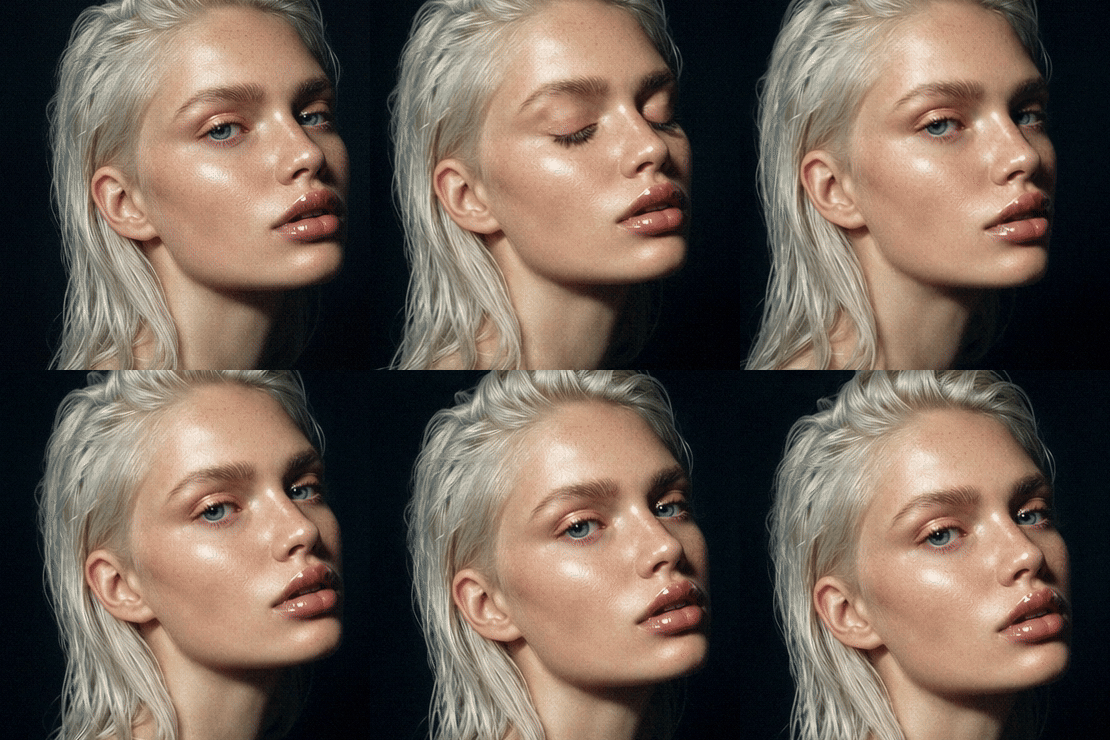
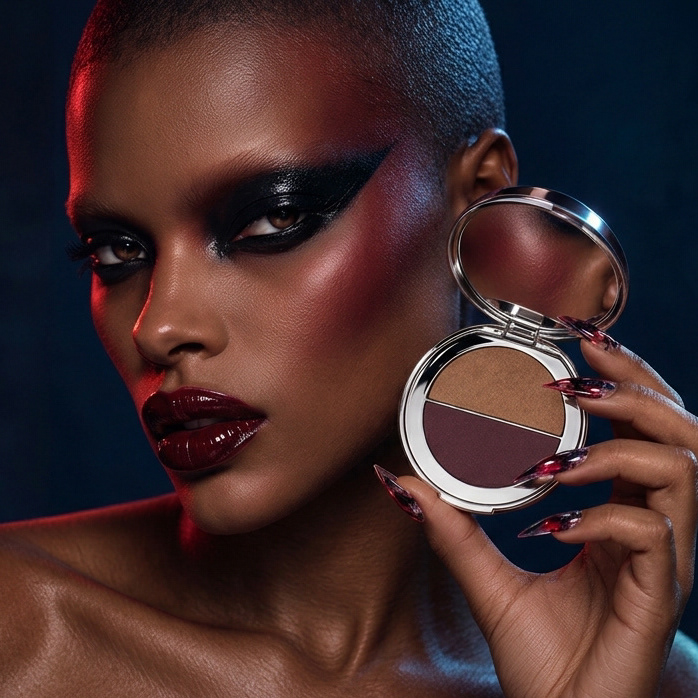
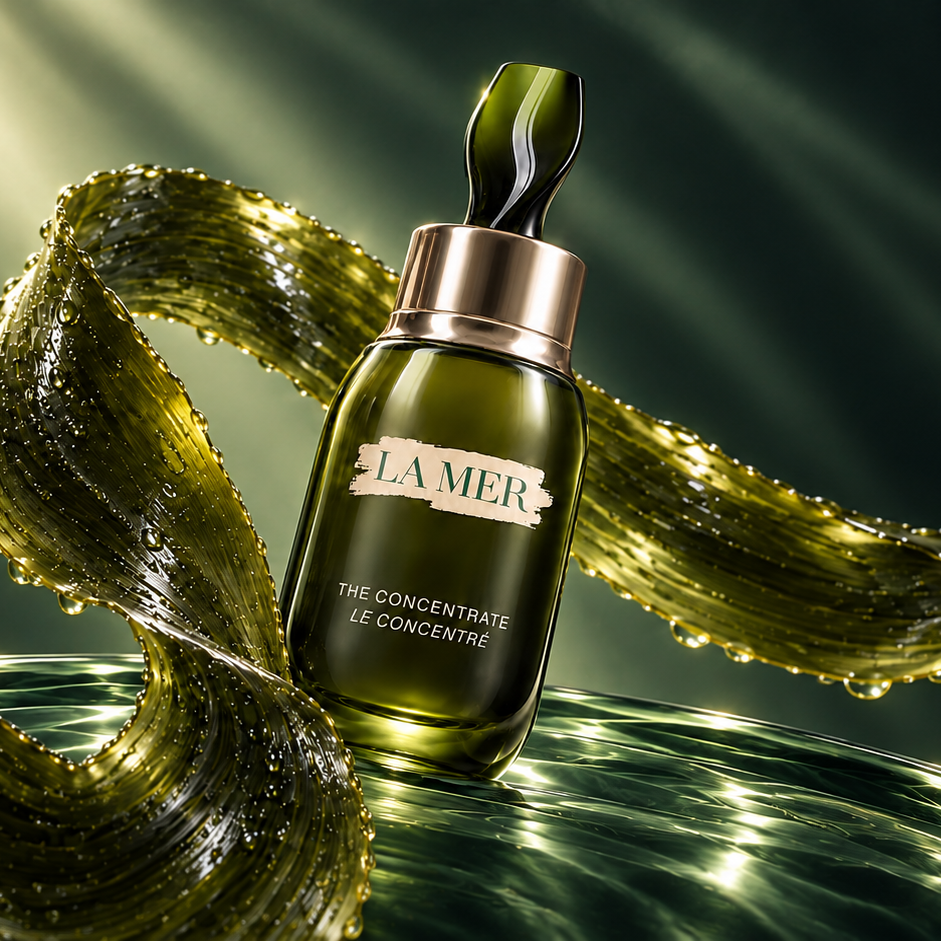
Beauty Product Visual Study
A product visualisation study examining how a supplied cosmetic reference can be translated into a controlled campaign direction.
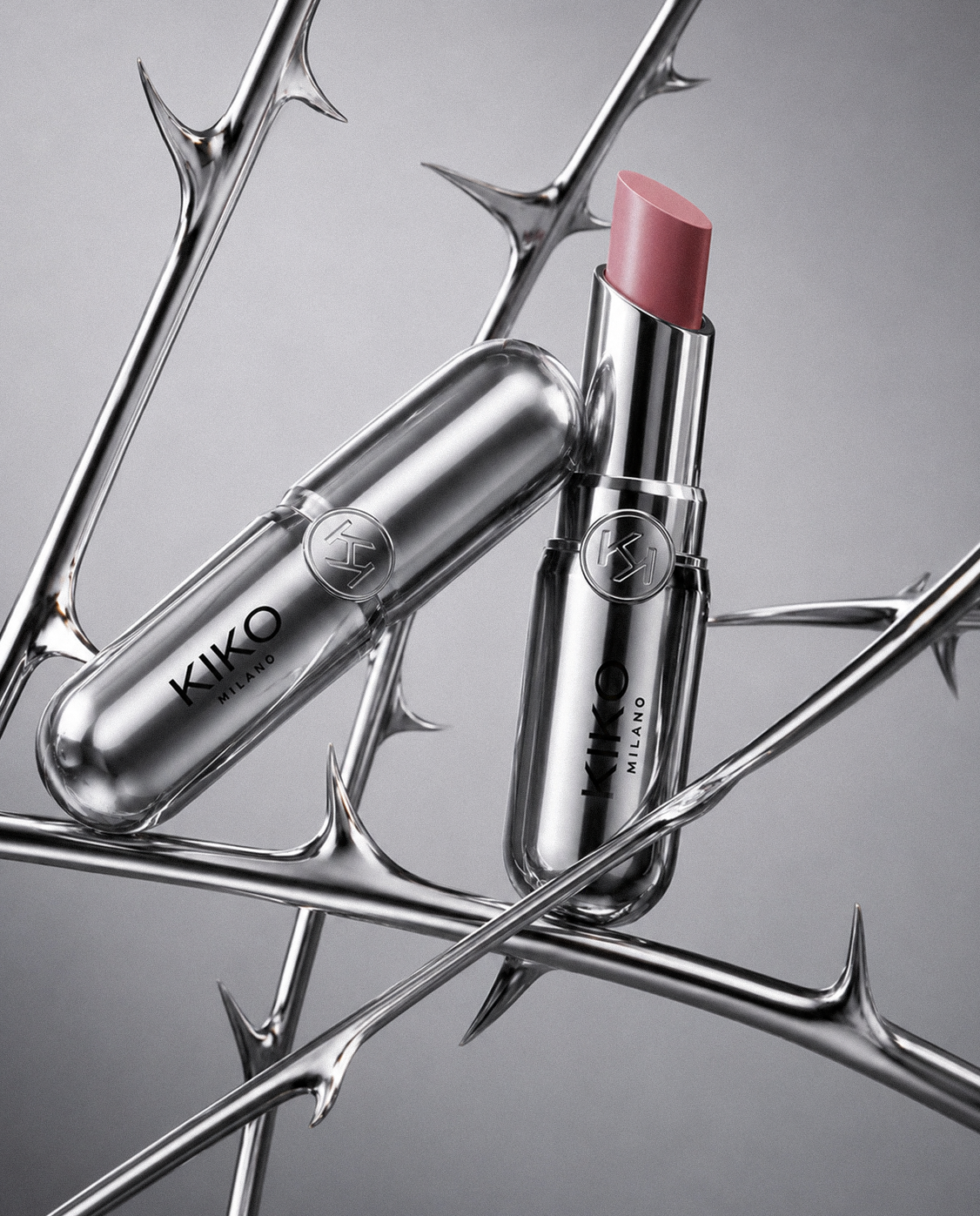
The visual route combines a soft pink lipstick with polished chrome, sharp organic structures and cool editorial light. The contrast between pigment and metal gives the product a precise and recognisable setting.
The workflow was used to explore materials, compositions and alternate scenes before selecting and refining the strongest direction. Product fidelity was assessed throughout, with compositing and post-production used where generation alone could not preserve the design accurately.
Role: Art direction, AI-assisted visual development, image curation, compositing and retouching.

Project Overview
This project explores an AI-assisted workflow designed to accelerate the early stages of product visual development: moodboarding, material research, scene exploration and art direction.
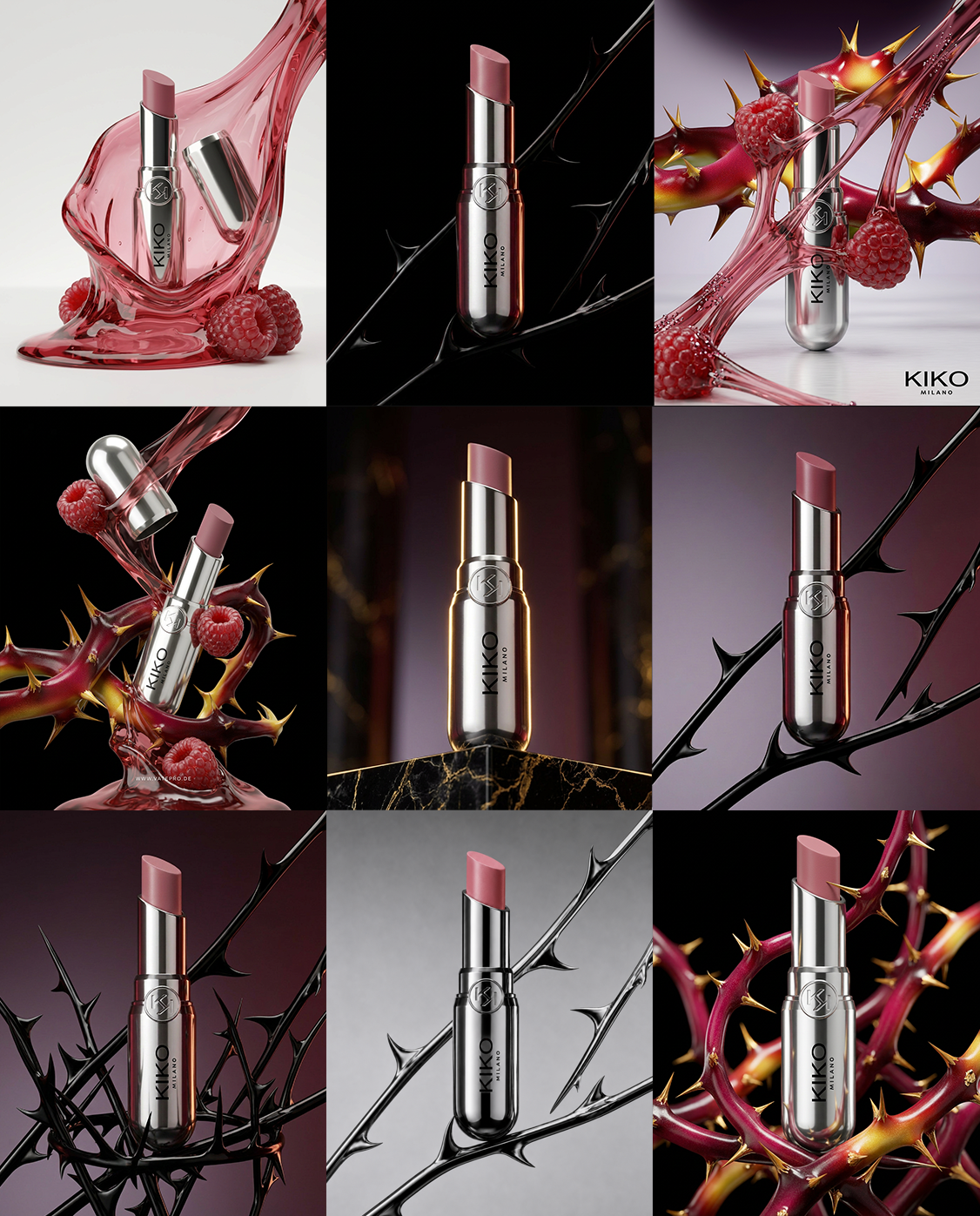
Starting from a beauty product reference, the goal was to generate different visual territories around chrome, metallic thorns, soft pink pigment, cold contrast and editorial product lighting.
The intention was not to create a perfect final campaign image, but to test how AI can support the transition from product input to visual direction.
Objective
The main objective was to build a workflow capable of taking a product reference and translating it into multiple visual routes while keeping a coherent aesthetic direction.
The test focused on three key areas:
Materiality — chrome, reflections, metallic surfaces and lipstick texture.
Visual territory — dark elegance, tension, beauty and sharpness.
Product fidelity — understanding how far AI can go before the product starts being reinterpreted.

Visual Direction
The visual language was built around contrast: a soft pink lipstick shade placed against a cold metallic environment.
The chrome thorns introduce tension and structure, while the product remains the central beauty object.
The goal was to create a balance between elegance and sharpness, softness and danger, cosmetic texture and industrial material.
Material Study
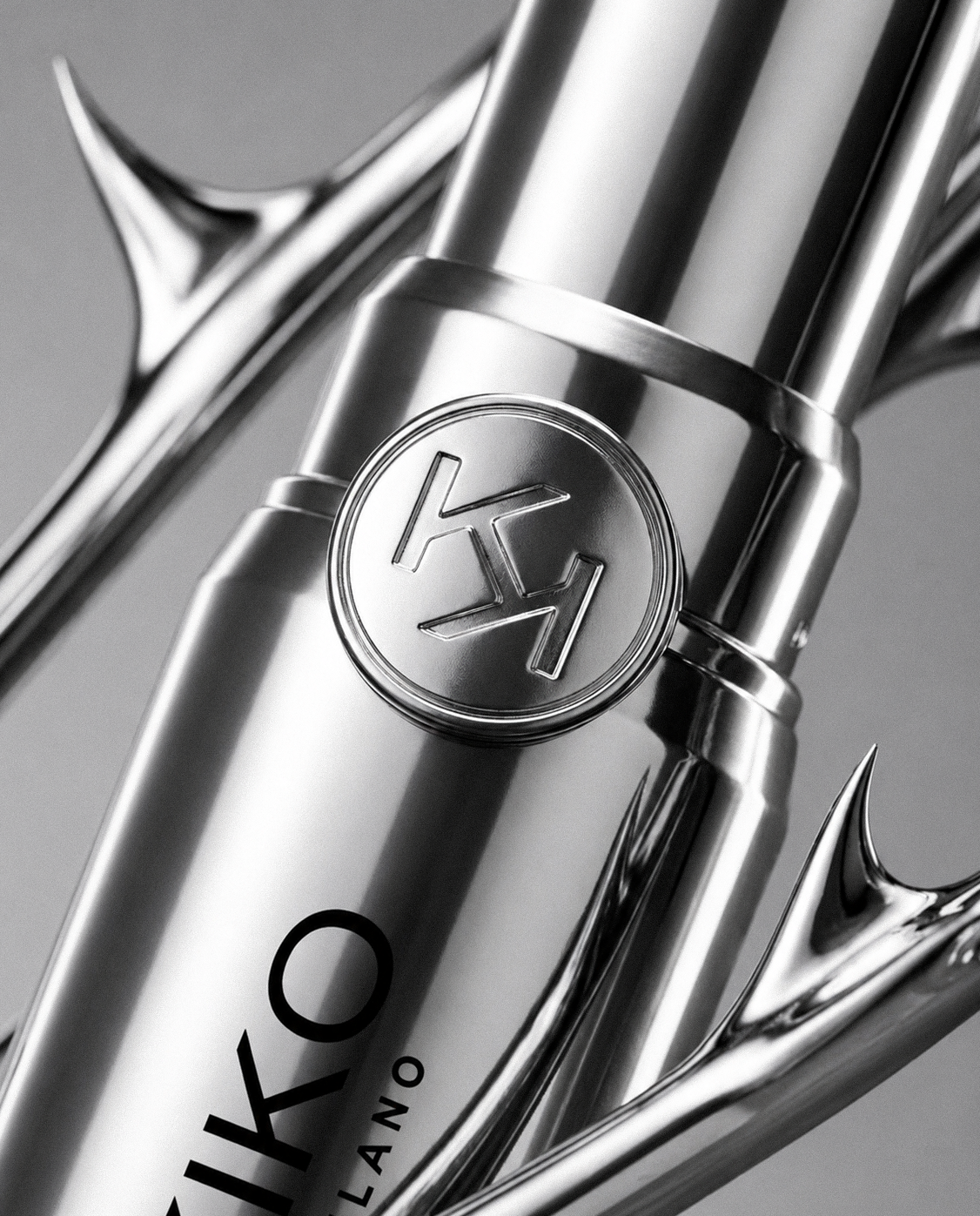
A key part of the exploration was understanding how AI could interpret different material behaviours: polished chrome, soft matte lipstick, specular highlights, embossed details and pigment texture.
These images were useful to test how close the workflow could get to a premium beauty visual language, especially in macro compositions where material quality becomes more visible.
Key Learnings
The strongest result of the workflow was not the generation of a single final image, but the ability to quickly explore different visual directions around the same product.
AI proved to be highly effective for building visual worlds, testing materials and opening creative routes. However, maintaining exact product fidelity remains a clear limitation, especially when asking for new perspectives.
For a final commercial key visual, I would keep the real product perspective as a controlled base and use AI to support scene development, atmosphere, material exploration and post-production.
Final Reflection
This process confirmed something important: AI does not replace the production of a final image. It transforms the way we explore, test and develop visual ideas.
The value is not only in generating options, but in knowing which direction to keep, what needs correction and how to turn an output into a controlled visual system.

Concept Video
Independent speculative project. Not commissioned by or affiliated with KIKO Milano.